Provocation #2: Dandelions DRAFT
The dandelion is a weed in Australia but a very beautiful one. There are about 2500 species of dandelion, 2 of which are native to Australia. They belong to a group of mainly yellow-coloured daisies. Young children find the fruit and flower phases of a dandelion's cycle fascinating. This is where we start our exploration.

Early observations
A five year old child runs into her grandparents house with a handful of picked dandelions. She wants to keep them alive for as long as possible so her grandma goes to get something to put them in. The five year old notices that the stems of the dandelions are different when she puts them into the glass of water her grandma brought over. Some of the dandelions stand higher than others in the glass.
Notice Explore Explain
Building on the childrens' fascination and ..., asking them:
-
what do you notice
-
what do you wonder?
We would now prompt them to focus their analysis on descriptions of the shell in order to promote some mathematical thinking.


Analysing the information
In these observations children may generate language related to t...t would suggest to us an a number of opportunities. These relate to
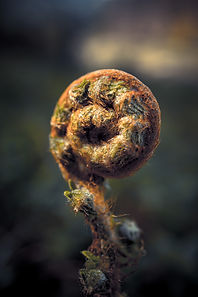
Swirl by Swirl
Planning with intentionality, we would


Building mathematical vocabulary
The language .
Focusing our mathematical content knowledge - what is ...?
Through observation, discussion and action (including gestures) our intention here is to start focusing children's attention on the definition mathematicians use to describe a . This is where our own professional wondering is important - what is a
This mathematical content knowledge is combined with our practice knowledge - a combination that is referred to as pedagogical content knowledge or PCK (Shulman, 1987).
Embodied Learning to promote connections
We would be looking for opportunities to deepen children's understanding of the connection between the 1-dimensional line and
A little bit the same, a little bit different
Building on these experiences, we suggest
.png)

Planning these experiences - connection to the EYLF2.0
We recognise that learning experiences achieve outcomes across those outlined in the Early Years Learning Framework 2.0 (AGDE, 2022).
In terms of the content and processes in these learning experiences, we will focus on Outcome 4: Children are confident and involved learners.
This outcome outlines the holistic nature of children’s learning, including experiences that “combine children’s sensory perceptions, body movement, actions, thinking and emotions" (p. 50).
The Key Components of this outcome include the development of learning and thinking skills and processes such as problem solving, inquiry, experimentation, hypothesising, investigating and reasoning. They focus on opportunities for children to transfer and adapt what they have learned from one context to another. Educators are encouraged to promote mathematical language, and recognise children's mathematical understandings so they can build on these.
These goals fit well with the experiences described above.
PLANNING
The five components of the EYLF2.0 planning cycle which inform out thinking about children's experiences are Observe, Assess, Plan, Implement and Evaluate.
Representing the initial..... experience would look like this:
OBSERVE - Listen/collect information
Engage with children's curiosity about
ASSESS - Analyse/interpret learning
Listen to, and watch for, the multimodal languages the children use to describe... and where we see them.
PLAN - Design
Planning with intentionality, incorporating children's prior knowledge, including enriching this experience
IMPLEMENT - Enact
EVALUATE - Critically evaluate
What worked well and why? How can I further extend this concept of spirals and the related big ideas? What is the evidence of learning, in relation to the intention of the experience(s)
References:
Australian Government Department of Education [AGDE] (2022). Belonging, Being and Becoming: The Early Years Learning Framework for Australia (V2.0). Australian Government Department of Education for the Ministerial Council. https://www.acecqa.gov.au/sites/default/files/2023-01/EYLF-2022-V2.0.pdf
Shulman, L. (1987). Knowledge and Teaching: Foundations of the New Reform. Harvard Educational Review, 57, 1-22. http://dx.doi.org/10.17763/haer.57.1.j463w79r56455411